
Showing posts with label autumn. Show all posts
Showing posts with label autumn. Show all posts
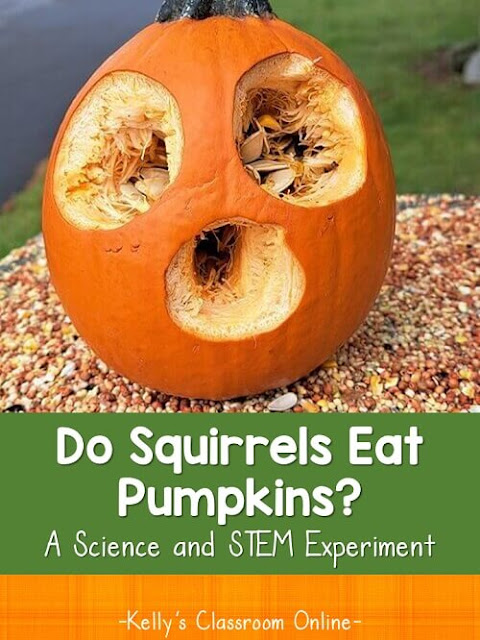
Do Squirrels Eat Pumpkins?
Have you ever looked out of your window to watch the squirrels gather food for
the winter? Have you ever wondered what they like to eat? Squirrels aren't picky
and will eat almost anything. We know they like to eat acorns, pecans, berries,
apples, vegetables from the garden, and seeds just to name a few. Sometimes
squirrels will eat food meant for other animals such as birdseed, cat food, and
even dog food. But... do squirrels like to eat pumpkins? Check out this science
and STEM experiment we conducted to try and answer this question.

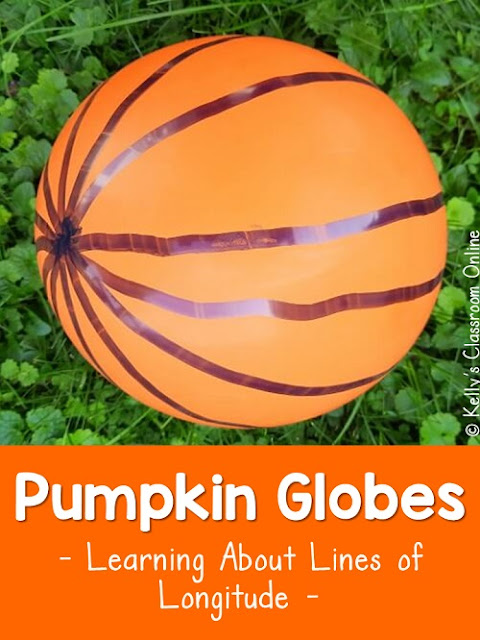
Lines of Longitude Pumpkin Craft
Making pumpkin balloon globes is a fun enrichment activity for your map skills
and geography lessons. (It's also a fun way to sneak in a bit of Halloween fun
without actually celebrating Halloween.) With minimal materials, your students
will be able to create a pumpkin balloon globe that will help them remember
where the prime meridian, International Date Line, the North Pole, and the
South Pole are and help them remember what lines of longitude are. Keep
reading to learn how to integrate making pumpkin balloon globes into your
social studies lessons.
Pumpkin Life Cycle STEM Activity ("Pumpkin Jack")
Autumn is the perfect time of year to learn about pumpkin life cycles.
You can find pumpkins at farmer's markets, grocery stores, and roadside
stands. And... you can even find them in coffees, teas, bread, pies,
soups, muffins, and more! Since pumpkins seem to be everywhere and in
everything during this time of year, it makes sense to incorporate pumpkin
life cycles into your science lessons in the fall instead of waiting until
spring when other plant concepts are taught. Keep reading to learn about a
fascinating pumpkin life cycle STEM activity and a popular children's book you
can use as a part of your science lessons!

Disclosure:
Affiliate links
to Amazon are included in this post.
All photos in this post are used with the permission of Blakeley Kantor.
Leaves in Fall by Mari Schuh
Autumn... also known as fall in some parts of the world... is the transitional
season between the heat of summer and the cold of winter. In the
northern hemisphere, autumn lasts from mid-September to mid-December and from
the beginning of March until the end of May in the southern hemisphere.
Autumn is marked by changes in the environment such as:
🍎 Leaves changing colors and falling from the trees
🍎 Temperatures dropping
🍎 Days getting shorter while nights get longer
🍎 Animals making preparations for winter
🍎 Farmers harvesting their crops

🍎 Animals making preparations for winter
🍎 Farmers harvesting their crops
Mari Schuh recently wrote a non-fiction book called Leaves in Fall for early readers in which she describes what happens to leaves
during autumn. Full-color photos and kid-friendly vocabulary are
used throughout her book. Read on to learn more about Leaves in Fall and how to integrate it into your lessons at school.
Disclosure:
Affiliate links
to Amazon are included in this post.
Oozing Pumpkins STEM Experiment
Halloween is coming! Families will be carving pumpkins and decorating their houses with them. When Halloween is over, these pumpkins will be thrown away, fed to animals, or tossed into compost piles. But... these pumpkins can be used for something fun and educational before being disposed of... science! Read on to learn more about a fun science experiment you can do with these leftover pumpkins.

Disclosure:
Affiliate links
to Amazon are included in this blog post.
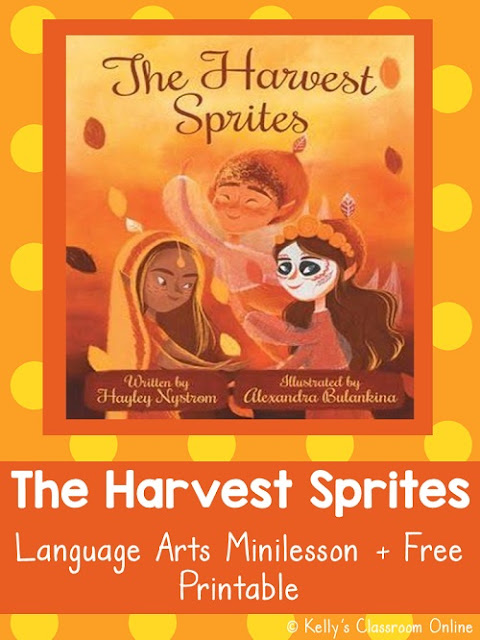
The Harvest Sprites by Hayley Nystrom
Call me silly, but I believe there is something wonderful and magical about autumn. I love the colors in the trees, the crispness in the air, wearing my warm sweaters and socks, wrapping myself in a blanket, and snuggling in with a good book. I love the tastes and smells of freshly made apple cider and cinnamon doughnuts. And I especially love the big bonfires and making s'mores with my family and friends. Autumn is my favorite time of the year!
I recently found The Harvest Sprites by Hayley Nystrom. I fell in love with it right away! It's a fun book with beautiful illustrations of everything autumn has to offer. Read on to learn more about The Harvest Sprites and how you can integrate it with your lessons at school.
Disclosure:
Affiliate links
to Amazon are included in this post.
How to Make a Paper Bag Pumpkin
When I was little, my father taught me and my brother how to make paper bag pumpkins. They were fun and easy to make. We used them as a centerpiece for our dining room table, as decorations for autumn and Halloween, and as simple toys to play with. Read on to learn the three steps to make your own paper bag pumpkin!

This is an updated version of a blog post I wrote in 2015.
Disclosure:
Affiliate links
to Amazon are included in this post.
Subscribe to:
Posts (Atom)